I am so excited to be working with IHI and CARE India on prevention of maternal and neonatal mortality.
The Northeastern state of Bihar has a long and proud history. Some time during the 6th century BC, Buddha attained enlightenment under a Bodhi tree in Bodh Gaya. In the same century, Mahavira, the 24th and final savior of Jainism, codified the Jain religion. Not far from Bodh Gaya is the site of one of the world’s first universities, founded in Nalanda in 450 CE. The countryside is beautiful with endless fields and colorful buildings, and the Ganges River runs the length of the state from East to West. Bihar is the largest producer of vegetables in India and the second largest producer of fruit. This emphasis on agriculture is emphasized by the fact that only about 11% of its population lives in urban areas.
And yet, even with all of these reasons for pride, Bihar is a troubled region with one of the highest rates of poverty in India, the highest rate of domestic violence (60% of married women are abused), and one of the lowest literacy rates in India (64% overall, 53% for women).
Typical dwellings seen from the road
Bundled up against the morning cold (59 F)
When you tell someone in India that you’ll be going to Bihar, you’re likely to get wide eyes and stern admonitions to be careful. It has a reputation for petty crime (“Keep your car windows closed, no matter how hot it is, or people will reach in the window to steal your purse!”) and mistreatment of women (“Don’t go anywhere by your self and don’t make eye contact with anyone!”). It all seems a bit heightened and hysterical, especially after you’ve been there and had a lovely time interacting with warm, smart, friendly people who have only the best of intentions.
Tejal Gandhi drops in on a meeting at the CARE office!
maternal and neonatal mortality across the state. WHO estimates that Nigeria and India combined accounted for one third of all maternal deaths in 2015. With one of the highest rates of maternal, neonatal, and infant mortality in India, Bihar is determined to improve. Our current focus is on 10 government hospitals spread across the state, where we are working with teams to cultivate improvement skills so they have the capacity to implement best practices for prevention. Once these initial hospitals have early successes and lessons to share, we will begin to spread to the other 28 government hospitals in the state, engaging outpatient facilities within each district as well. It is a huge project with immense potential.
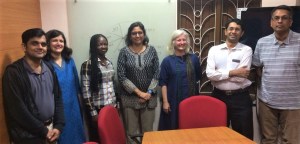
I say “we,” but my role is relatively small and loosely defined. Still, this is a mission that I can’t help but embrace, and I will support it in whatever way I can. Last week, I was able to travel to Bihar for an Improvement Coach Workshop, where I helped present some of the content (on the fly when a speaker was delayed), and provided table coaching during exercises. It was a great meeting, with the director of the Improvement Coach program coming over from the states, the regional director for the IHI initiative there to co-present with her and translate into Hindi, and a skilled Improvement Coach from Ghana there to begin her 3-month residency in Bihar. In addition, we were joined by many members of the CARE team who are very involved in the initiative, and representatives from state government who were lending strong support. Despite language differences (sure, people speak some English, but it’s really not their chosen tongue) and cultural surprises (people casually wander in up to an hour late for meetings, and once given an exercise, will not stop until they are done, even when the time is up), it went well and concluded with great enthusiasm from participants.
This slideshow requires JavaScript.
I look forward to returning a few more times this Spring, to provide support for new improvement coaches, and to run a collaborative learning session. It feels great to participating in something so important and learning so much.
Visiting Shanti Bhavan is like visiting the future of India as it should be. Thanks to a visit organized by the Five Oceans Club, I was able to travel with a group to Shanti Bhavan on Saturday. I left filled with hope for the world, and deeply inspired by these kids and the incredible mission of this school.
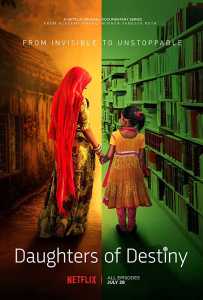
If you’ve seen the documentary “Daughters of Destiny,” you’re probably already inspired, and this blog post will just flesh out some more details for you. If you haven’t seen it yet, it’s available on Netflix and you should watch it immediately!
Shanti Bhavan was founded in 1997 by Abraham George, a successful Indian-born businessman with an incredible vision of how to radically interrupt the cycle of generational poverty that stifles over 25% of the Indian population. He looked at what he was able to offer his own children – a safe and loving home along with educational and extra-curricular advantages – and imagined offering that to children who would never otherwise have it. The children of Shanti Bhavan come to the school at 3 ½ – 4 years old, visiting their families only for holidays. All of their physical needs are met (safety, shelter, nutritious meals, clothing, and needed healthcare); they are nurtured by housemothers and faculty that appreciate them as individuals; and they receive a world class education that covers not just academics, but also leadership and critical thinking skills along with dance, music, and art. The support does not stop with graduation from high school, but continues through university and even graduate degrees, providing ongoing education and mentoring for as long as it’s needed. These children of the poorest of the poor, the so-called “untouchables,” can become leaders in their communities and in their nation, helping India move toward a society where everyone’s potential is recognized, valued, and realized. Dr. George expects that every child he helps will be able to impact the lives of 1,000 more children during their lifetime.
My journey to the school started early in the morning as I headed to Koramangala, a neighborhood in South Bangalore. There we met up with others and got on the bus for the 1 ½ hour drive to the school on the border of Tamil Nadu. The other 20 or so participants on our social awareness tour included people from India, the UK, Sweden, and the US, many of whom brought their children. Some had seen the documentary, some had read The Elephant Chaser’s Daughter which was written by a graduate of the school, and some had just read a blurb about the trip and decided to go. We were all eager to learn more, and to particularly figure out how we might be able to be a part of this exciting vision.
Arriving at the school, we were greeted by some of the most poised 11th graders I’ve ever met. They shook hands and introduced themselves with confidence, they smiled and asked questions, they articulately responded to any query. These impressive kids were our guides for the tour. John and Nandini took my group of 6 around the school, showing us into different classrooms where children happily greeted us. Saturday classes are just half the day with free time in the afternoon, so our morning tour caught them all in their classrooms. We also saw the computer lab, the chemistry and biology labs, the libraries, the dorms, the cafeteria, the lovely grounds, and the non-denominational prayer room.
This slideshow requires JavaScript.
The daily assembly was a highlight that started with a prayer for the teachers, a prayer for the students, and singing the school song about all the things these children can become. I was impressed to see a 4th grade girl get up to speak to that day’s virtue: Gratitude. She stood up straight and spoke loudly and clearly to a room full of her peers, her teachers, and a bunch of strangers. She was followed by four high school students presenting stories from that day’s news. Not only did they have to speak without notes about current events, but they had to be prepared for questions from anyone in the room, many of their peers posing probing and thoughtful queries. Assembly closed after two beautiful songs by the school chorus.
Before lunch, we sat down with Dr. George and his son Ajit, now the full time Director of Operations for the school. Both are passionate about Shanti Bhavan and its children. Dr. George considers every one of the SB students to be his own children, and treats them as such, acknowledging that they probably get more of his attention than his own sons received. This point is backed up by a laughing Ajit who says that he wishes he’d gone to Shanti Bhavan. Both stress that Shanti Bhavan is not run by money, but by love. They hope to soon break ground on a second school in Karnataka, with a long term vision of multiple schools around India to increase the impact of their efforts.
During lunch, I had the chance to speak with two Australian couples that have been volunteering at Shanti Bhavan for many years. One couple came for the first time eight years ago, after retirement, intending to go somewhere else the following year. They’ve returned now every year for the last eight, explaining that “these kids have gentle claws” that pull them back. The other couple has been joining them for a month each year for the last four years. They love their time at Shanti Bhavan, however tiring it may be, and fully intend to keep coming.
The work of Shanti Bhavan is already making a difference with graduates now working for prestigious organizations, making more in the their first few years of work than their parents would earn in a lifetime. They support the education of younger siblings, provide stable housing and medical care for their parents, and are already beginning to make steps to improve their communities while still in their early twenties. Their potential impact is unlimited.
But you know what is limited? Money. While Dr. George was able to start this school with his own money earned as a successful businessman in the US, the 2008 crash and a devastating scam have long since exhausted those funds. The school now survives through donations which must be constantly sought. When I visited Anu Life, I offered to buy purses and bags for interested folks back home (that offer still stands!) in an effort to support their efforts. I can’t offer you anything tangible in exchange for your support of Shanti Bhavan, but I can promise you bountiful good feelings from the knowledge that you are supporting something that matters. Donations to Shanti Bhavan are not lost to administrative costs, but go straight into the children of this incredible organization. If you don’t have money to spare for this cause, consider sharing their vision with friends who may. And consider volunteering at this school that will highly value your expertise and the love you can give to these amazing children.
Among the benefits of moving to India is the incredible opportunity for travel, both in this immense and diverse country, and across the region. We do our best to take full advantage. For winter break this year, we were joined by our dear friends Rachel and Laurence for a three week exploration of Tamil Nadu and Sri Lanka. After three weeks of full-on togetherness, we’re happy to report that we all still like each other.
This was a slightly complicated trip, with many components but none that we’d leave out in retrospect. In Tamil Nadu, we started our journey with three days with our friend Kaveri’s aunt and uncle in Bokkapuram. It was the perfect start! From there, we went on to two nights in the charming little city of Mysore. We then flew to Chennai where we were picked up by a kind and competent driver, Raman (from Marvel Tours), who drove us to the backpacker beach and rock carving town of Mahabalipuram for two days, the French-influenced coastal town of Pondicherry (or Puducherry), and then to his inland hometown of Tiruvannamalai. We then drove back to Chennai for the flight to Colombo, Sri Lanka.
After one night in Colombo, we went to the so-called cultural triangle of Sri Lanka where we stayed centrally in Dambulla for three nights, but took trips to the ancient ruins of Anuradhapura, the only slightly less ancient city of Polonnaruwa, and climbed the monolith of Sigiriya. We followed that with one night in the lovely lake town of Kandy before continuing on to our Airbnb, just a short walk from the beach and activity of the tourist town of Hikkaduwa. After three nights there, we packed up for Rachel and Laurence’s continuing travels in Shanghai and our final night of vacation back in Colombo.
Along the way, especially in Sri Lanka, we discovered a number of foods we want to add to our ever growing list of foods we want to learn to cook:
Roti (or, charmingly, rotty), a folded, griddled wrap we had in Hikkaduwa.
Kottu, a Sri Lankan hash whose primary ingredient is paratha.
Pineapple curry, something Tom was more taken by than Melissa, but who doesn’t want some pineapple curry?
An eggplant and caramelized onion dish that was everywhere we went in Sri Lanka and even eggplant-hating Tom enjoyed, especially at Bookworm Library in Hikkaduwa where the caramelized onion flavors overwhelmed the eggplant.
It was a wonderful trip overall. Details are in our individual posts, but it’s worth noting some of the interesting differences between India and Sri Lanka. First of all, Sri Lanka is clean and green everywhere you look and generally smells good. We may have just been sheltered from it in our touristy places, but there wasn’t the kind of obvious poverty that one sees in India, and the infrastructure (e.g. roads) is much better. This may be related to the fact that Sri Lanka has a 96% literacy rate (as compared to 86% in the US and 74% in India). There are as many temples in Sri Lanka as in India, but most of them are Buddhist. We’re used to seeing Shivas everywhere, so it was surprising to see Buddhas on every hilltop. And the fruit was outstanding – best pineapples and melons ever, very nice mangoes and oranges, and Rachel was particularly delighted by the plentiful passionfruit. On a very superficial level, we’d say that Sri Lanka is like India light. If you’re interested in visiting India, but you’re a bit nervous about the chaos and anxious about logistics, consider Sri Lanka. It’s easy and beautiful and friendly. We’ll definitely be back.
Point of order taken by Tom: Melissa worked herself crazy for this trip. With some assistance from Laurence, Melissa planned and planned and planned, finding us the wonderful mix of hotels, from super fancy to super affordable; transportation that required more attention in Sri Lanka than it should have; and what I feel like must have been all of the important sights in all of the places we visited. This coupled with the fact that while we were toying with going north to Rajasthan she basically planned a second, nearly complete three week vacation. I can not tell you enough how much I appreciate the work she put in to this. It really was way more wonderful than I dared to hope for. She’s wonderful.
One final note. Many of the (best) photos are taken by Laurence. Thanks, Laurence!
After a long couple of weeks of nearly constant travel, we were ready to set up camp for a few days on the Southwestern coast of Sri Lanka. A four hour drive from Kandy took us to Hikkaduwa where we met our Airbnb host Nissanka and settled in to our home for a few days.
Hikkaduwa is a cute little town. It is definitely set up to cater to tourists, but that was ok for our last little stretch. Our goals while here were to find some of the traditional Sri Lankan food we’d only nibbled around; to sit on the beach and swim in the Indian Ocean; visit Galle, a town to the Southeast; and just relax. We did all of those things.
Our food experience in Hikkaduwa was one of extremes: unbelievably delicious or maddeningly frustrating. The frustrating came at Mama’s, where the food was disappointing enough to not overcome the pretty lousy service and an incredibly loud live band. The frustration was slightly alleviated by the fact that the beach was feet from where we ate, but it was a meal we were ready to forget. We were also disappointed to not have the chance to cook our own meals at our Airbnb. It was a beautiful home that provided a fabulous few days, but the air conditioners and fans were insufficient to overcome the heat anywhere but in the bedrooms. It didn’t make us super excited to cook a lot of food and add to the heat. We settled for eggs and fresh mangoes and pineapple for breakfast and more fresh fruit cocktails from our resident mixologist Laurence. Not too shabby, we realize, but we had also hoped to cook at home one night.
Happy on the terrace
Enjoying the evening bat show from our terrace while drinking tasty cocktails
Purple-faced langur – really big and grunts like a gorilla!
Delicious Kottu
The unbelievably delicious came in a number of places. For lunches, we hunted down the best rated versions we could find of some of the Sri Lankan food we had read about and had nibbles of in other places. We found the Sri Lankan version of roti at No.1 Roti Restaurant (that’s the name, not descriptor) on the main drag in Hikkaduwa. Sri Lankan roti is really a folded roti (flatbread) wrapped around delicious fillings and then grilled. They come in sweet and savory, and they are delicious. In the Galle Fort neighborhood of Galle we found Hula Hula Cafe for Kottu. Kottu is a sort of a hash made with chopped up paratha, spices, and whatever else you choose to put in there: veggies, cheese, egg, meats. We loved it.
Our favorite dinner in Hikkaduwa, maybe in Sri Lanka, was at Bookworm Library. It was our favorite dinner despite the fact that it was our only dinner not on the beach. It was a tiny all veg restaurant (sorry, Laurence, though he didn’t seem to suffer), with about eight tables and a set menu. We quickly learned that the set menu was because it is basically home cooking. A kind woman and a small staff cook a few dishes: some dal, a ubiquitous caramelized onion and eggplant dish, a curry made with jackfruit, pineapple curry (Tom’s favorite), and other dishes. It took us back to our meals at Mohan and Jagu’s place in Bokkapuram on our first stop, where Jagu and her helpers made for us meal after meal of amazing home cooking. If you’re ever on the Southwestern Sri Lankan coast, this is a must, whether you’re veg or otherwise. But be advised — stop by and make a reservation first. We watched family after family get turned away.
We wanted the final dinner of our vacation as a quartet to be special. Nissanka and a couple of others had recommended Refresh to us. Our first evening in Hikkaduwa we tried to go there, but we were unsatisfied with our table. It’s billed as a beach restaurant, and while we could hear the ocean out there somewhere, we were seated at a table on the other end of the very long and skinny dining area, two sections away from the ocean itself. We talked to the manager and were able to reserve one of the few tables right on the beach. We decided to make that our special culminating dinner. We were not disappointed. The food was very good, not great, as was so much of our food in Sri Lanka. Most notably, the deviled cashew curry was delightful. Cashews in a spicy cashew gravy. What can go wrong? We had seen this “deviled” label on a lot of food, and we think it has something to do with the spice mix. Regardless, what made Refresh so super special was sitting there watching the waves lap up on the shore, feeling like we were some of the few people in an otherwise very busy restaurant. It was lovely. As ever, the rhythms of ocean waves have a way of melting away any stress or worry or sadness over the impending end of a vacation. What a perfect end.
As for adventures in Hikkaduwa, while the main goal was rest and recharging for the return to work (for Tom), we did have a couple of interesting days. One day we went to Galle Fort, which dates back to the 16th century Portuguese colonists and fortified by the 17th century Dutch colonists. Now it is a cute, hip neighborhood with all kinds of shops and restaurants in super old buildings surrounded by a well-preserved protective wall. We had notions that it would be fun to come here, which were confirmed by our fabulous cousins Jim, Kristin, Sienna, Willow, and Kai Devoe-Talluto the week before our vacation, but when they told us they had had gelato at Isle of Gelato worthy of any they had enjoyed in Italy, it became a priority. Mmm. Gelato. To add to the charm of a charming town, Nissanka, our Airbnb host, was so generous of his time to drive us to Galle, about a half hour drive, and home again. He also took us on a little tour of the town that had us wanting to come back for more. It felt more like a town of Sri Lankans than Hikkaduwa, a town of tourists.
This slideshow requires JavaScript.
Our other priority was swimming in the Indian Ocean. Rachel scoped out the rarest commodity on the beach — a free bit of shade. We set up camp and took turns swimming in the warm, delightful sea. It was relaxing, rejuvenating, and amazing. We simply love the ocean. Looking out at the water, head to the left, take a left, then take a right — you’re in Seattle (the Canal and Portland get a little more complicated).The last morning in Hikkaduwa meant time to pack up. We bid farewell to Rachel and Laurence at the Colombo airport and spent one last night just the two of us back in Colombo. It was a wonderful end to a vacation that exceeded our lofty hopes.
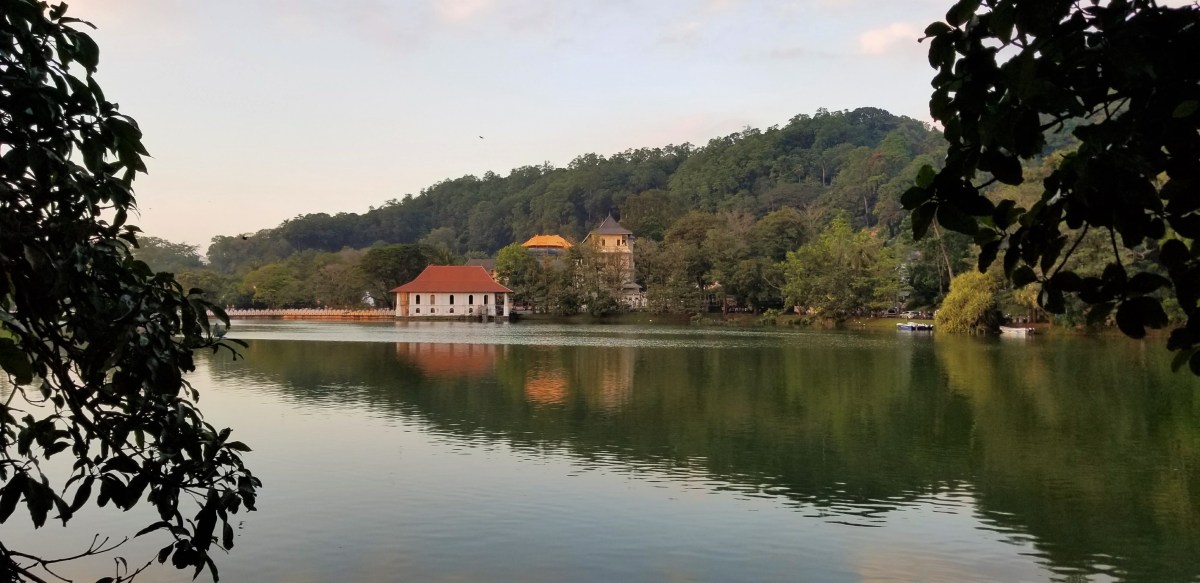
Kandy is sometimes included in the Cultural Triangle to its north and sometimes included in the hill country to its south because it lies right between the two. It’s the second largest city in Sri Lanka and was the capitol of the Sinhalese kingdom until conquered by the British in 1815. At its center is a large and beautiful lake made in 1807 with a gruesome history as workers who objected to working on it were killed on spikes at its center. There’s no evidence of that today, though!
Island in the lake
Tom on the terrace outside our room
Our hotel from across the lake
After checking in to our lovely hotel with a balcony overlooking the lake, we headed out in hopes of getting ice cream from a place Melissa read about. Sadly, it was closed, as were many establishments because this was the first full moon of the year, an important holiday in the Buddhist tradition. We settled for inferior gelato at the mall, but it was fine. We very much enjoyed wandering through the market full of beautiful produce and then walking along the 3-mile path all the way around the lake. Along the way, we walked past the Temple of the Sacred Tooth Relic, which apparently holds Buddha’s tooth, rescued from his funeral pyre. A number of temples in Anuradhapura and Polonnaruwa had previously made a similar claim because possession of the tooth was an indication of power. The tooth is kept inside a box inside a box inside another box, so people really just line up to the see the box, and many suggest that it actually holds a decoy with the real tooth safeguarded elsewhere. Still, white-clad pilgrims filled the grounds with reverence.
Water Monitor
Kandy market
For dinner, we made our way to a delicious hotel restaurant called Cafe Mango Garden. They specialize in a “buffet” that they bring to the table. It really seemed to be the Sri Lankan version of an Indian thali with a variety of complementary dishes, all of them very tasty, but none of them featuring mango. After dinner, we went across the street to a hotel with a rooftop bar, where we learned that alcohol was not served today, again thanks to the Poya (full moon). We settled for fruit juices and then went home.
Dinner
The full moon the entire city was celebrating.
Illuminated Buddha (left) looking at his tooth in the temple (right)
Girl on our balcony celebrating the full moon.
The next morning, we were greeted at breakfast with plain eggs (too runny for Melissa to eat) and plain white bread. Yup, we forgot to say that we didn’t want the boring white people food. How many times will we have to learn that lesson?!
There was no point in lingering over breakfast so we decided on two stops before heading out of town. First, we returned to the market where we bought pineapples, limes, mangoes, passion fruit, mandarins, and cashews for our stay at an Airbnb in Hikkaduwa. Then we went back to the ice cream place that was closed the day before. Sure it was only 10:30, but we were primed for this ice cream! TripAdvisor rates Cool Corner as the top rated restaurant in Kandy – how could we skip it? They make “fried” ice cream, which really means that they mix together the ingredients of your choice and then spread the liquid over a frozen platter that looks like a frying surface. This rapidly transforms your liquid into ice cream while you watch them scraping it over the surface. It’s fun to watch and very tasty, but not a great option with five people since they are made one at a time. Rachel got hers first and was done by the time the third was made. Our driver’s came last, and we all just kind of awkwardly watched him eat it. Still, it was hard to regret such a tasty treat.
We then piled into the car for the 4-hour drive to the beach community of Hikkaduwa.
The cultural triangle of Sri Lanka is in the center of the country, about a 4 hour drive from Colombo on the coast. When planning our trip, we were initially excited about the beaches of Sri Lanka but were soon intrigued by stories of ancient cities, cave temples, and mountain top palaces that we just had to see for ourselves.
Our home for three days was Sundaras Resort and Spa, which sounds a bit fancier than it was. There was no elevator, and we were on the 4th floor with Rachel and Laurence directly above us on the 5th floor. Rooms were basic, but clean, and most showers had warm water. Luckily none of us mind stairs, and we very much enjoyed the pool with swim up bar serving some lovely fresh juice cocktails (that detail allowed us to relive one of the ways we were pampered in Fiji with Elaine/Mom and Aunts Linda and Sue). We stayed in Dambulla, placing us equidistant from 2,000-year-old Anuradhapura and the
View from our balcony
relatively youthful 1,000-year-old Polonnaruwa, as well as a short drive from the palace/fort-on-top-of-monolith Sigiriya. As an extra bonus, the cave temples of Dambulla were right down the road and visible from our hotel balconies. It was a busy and wonderful few days.
On our first full day there, our driver took us 90 minutes northwest to Anuradhapura. We had him drop us off at one end and pick us up at the other so we could walk the whole thing. It should be noted that it was hot, most days around 90 degrees with 70%+ humidity, so all the walking was ambitious but totally worth it.
Anuradhapura is a UNESCO World Heritage site with a recorded history that dates back to the 5th century BC, with archaeological evidence that goes back to the 10th century BC. It was a place of great significance, conquered and reclaimed by various rulers over 1,000 years. As we walked around, we first saw the
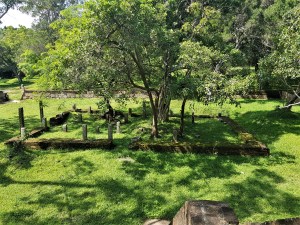
Nature reclaims a monk’s dwelling
remaining ruins of the 2nd century BC Buddhist Abhayagiri Monastery that once housed 5,000 people and which the Buddha is supposed to have actually visited. Much of it is being gradually reclaimed by nature, but it’s easy to imagine the thriving center it must have once been. We then walked through the ancient citadel and then continued on to the Sri Maha Bodhi, a temple with a sacred bodhi tree at its center. This tree was grown from a cutting from the Bodh Gaya tree where Buddha attained enlightenment and has been continuously tended for 2,000 years with historical records to back up the claim, making it the oldest documented living tree in the world. The temple itself was full of people, many chanting prayers alone or in groups, creating this reverent cacophony as we walked through. The whole experience was amazing, but after 4 hours in the hot sun we were delighted to head back to the pool at our hotel.
This slideshow requires JavaScript.
The next day, we went 90 minutes northwest to Polonnaruwa. Along the way, we were delighted to see a lone elephant at the edge of a lake as we passed Minneriya National Park. Of course, we got out to spend some time watching it wander and eat before continuing on.
Elephant on our way back from Polonnaruwa
Elephant on our way to Polonnaruwa
While Anuradhapura is really large and spread out, Polonnaruwa is a bit more compact and manageable, although our determination to see it all still meant a lot of walking in the heat.
This slideshow requires JavaScript.
Also a UNESCO World Heritage site, Polonnaruwa dates back to the 11th century and much of it is still intact.
This slideshow requires JavaScript.
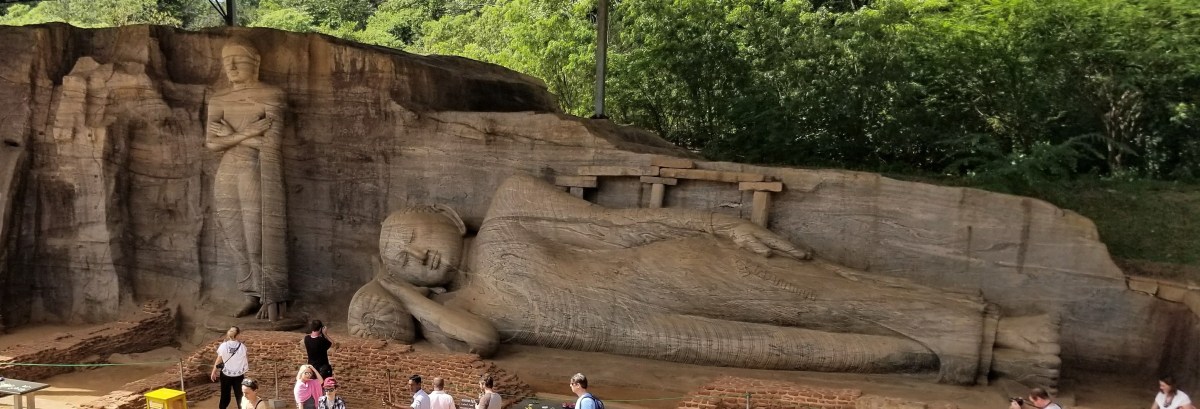
While it was all truly amazing to see, perhaps the most impactful part was Gal Vihara, a 12th century rock temple comprised of four magnificent carvings of the Buddha. As at all temples, we removed our shoes and hats to Melissa’s blistered feet. While Hindu temples often force people into close quarters that inspire jockeying for position, Gal Vihara is built to face out toward a large open area where people stand or sit to gaze and pray, with plenty of room for everyone.
This slideshow requires JavaScript.
The dwarfs.
We finished the day at Polonnaruwa with a visit to the Tivanka Image House with a beautiful statue of the Buddha inside and, in the words of our guidebook, “energetic dwarfs cavorting around the outside.” And of course our day wouldn’t have been complete without a bit of wildlife in the form adorable monkeys and a snake! We then met up with our driver and asked him to take us to the Dambulla Cave Temples.
The Cave Temples were like nothing we’d imagined. After paying admission, we climbed over 300 steps to breathlessly get to the temples which are basically rooms carved out of the solid rock of the cliff. Inside the five rooms are an incredible number of statues of the Buddha, some clearly carved right there from the stone of the cliff while others appear to have been brought there. The largest is a 15-meter long reclining Buddha with exquisite detail. So very beautiful.
Monkeys along the steps
Seated Buddha
Standing Buddhas
Reclining Buddhas
More seated Buddhas
Lovely lotus pond outside the temples
A word about the paid admission. Sri Lanka is an extraordinarily affordable place to visit, even compared to India. These ancient sites are a bit of an exception. We as foreigners each paid between $25 and $40 for each site, astronomical by South Asian standards. However, as we mentioned, most of these are UNESCO World Heritage Sites, and they are beautifully maintained, especially by South Asian standards. They are simply beautiful. We probably would have been happy to pay the fees on any occasion, but now, with the current American administration refusing to pay the US dues to UNESCO, we felt like those fees are important to pay, not just acceptable. These sites world wide must be supported so they don’t fall in to the ruin we have seen in other places. And wealthy countries like the US need to do more than their fair share.
On our final morning in Dambulla, we got up early (kind of a big deal since this was New Year’s Day) and drove the 30 minutes to Sigiriya. Laurence remembered wanting to climb Sigiriya 20 years ago, and we were all pretty excited about it. It’s definitely not a climb for the faint of heart, and not one to undertake without some serious determination. The total climb probably took only about 45-50 minutes, but that entire time is climbing straight up, often on small steps with just tiny railings to prevent a fall down the cliff. But, oh, was it amazing at the top! The early start time was key, since starting later would have meant climbing in the heat of the day in direct sunlight. The views were gorgeous, as were the ruins of the 5th century palace fortress constructed by Kassapa after he murdered his father and seized the throne. Some carvings are much older, and there may have been a monastery there before Kassapa’s arrival, but it’s easy to imagine why a vulnerable king might choose this inaccessible location.
This slideshow requires JavaScript.
When we weren’t marveling at antiquities, we spent our time at our resort. We learned that Sri Lankans don’t generally eat dinner out, so restaurants are essentially creations for tourists. Our dining options consisted solely of hotel restaurants, so we decided we’d be just as happy at our own hotel as at anyone else’s. And the evening buffet was pretty tasty, served by the charming and very international staff. And we couldn’t beat cocktail hour split between drinks at the pool and drinks prepared by our resident mixologist, Laurence, using fresh limes and passion fruits spirited away from the breakfast buffet.
We debated our New Year’s Eve options and considered staying up until midnight as usual, but we decided that our desire to climb Sigiriya was greater than our desire to greet the new year through bleary eyes, so we went to bed around 10:30. Of course, we woke up at midnight anyway, thanks to abundant but brief fireworks.
Our visit to Colombo was really two visits. We had such a nice time on our first night in Sri Lanka (having arrived from Tiruvvanamlai) that we promptly took advantage of a special “welcome back” offer and booked for our final night as well. Coming from Bangalore, Colombo felt almost artificially sanitized. There’s a little bit of litter, sure, but no garbage piles at all. Traffic is a bit heavy in the city, but people actual use lanes for driving and (the biggest shock of all) they stop at crosswalks and wait for pedestrians to make it across the street. Amazing!
We stayed at the Movenpick Hotel, which has gorgeous views of the Indian Ocean from our hotel rooms and from the rooftop deck, where one could admire the view from the comfort of the infinity pool before reclining on a lounge chair with a cocktail. Yes, we were truly spoiled.
This slideshow requires JavaScript.
Sadly, Rachel was battling some stomach distress so didn’t join us for our first Sri Lanka dinner, but the remaining travelers ventured out to the Palmyra restaurant where we sampled our first hoppers (a sort of bowl-shaped, rice-based bread that’s thick on the bottom and crispy on the edges, often filled with things, not unlike appam, which we enjoyed at Koshy’s on our first breakfast outing in Bangalore), vegetable fried rice (basically Chinese, but everywhere in Sri Lanka), cashew curry (yes, nothing but cashews in curry sauce – yum!), and sambol, a tasty dried coconut and chili condiment that spices up anything. Also, some kind of saffron pilaf and a meaty thing for Laurence. It seemed clear that we would eat just fine in this new country.
The next morning proved that true when we went to the beautiful Galle Face Hotel for brunch. We arrived just 15 minutes before they were to begin clearing away the food, so there was no time to waste! We frantically helped ourselves to everything that looked good and just barely managed to fit it all on our table. When it was time to leave Colombo, we didn’t want to go! We hadn’t yet done much wandering around the city itself, and it was hard to part with the luxury of the Movenpick. Such a happy thought that we could return for the final night of our trip.
When we came back again, our room didn’t have the same magic as our first room (broken AC, lower floor with an inferior view, smaller bathtub), but it was still a delight to be there. We wandered around the fort area which had some gorgeous old buildings and monuments but paled a bit in comparison to the charm of Galle Fort which we’d visited just the day before. The heat was pretty incredible given that this is supposed to be the coolest time of the year, and we were glad to call an end to exploring by mid afternoon and retire to the terrace of the beautiful Galle Face Hotel where we enjoyed cocktails while admiring the ocean view before going back to our own hotel to relax before dinner.
For our final dinner of vacation, we had a couple of factors to consider. We wanted to celebrate in style, with at least some of the amazing Sri Lankan food we’d been introduced to in the past week. Also, Rachel and Laurence flew out to Shanghai that morning, and while it was sad to see them go, we were also able to enjoy a day and evening as the two of us instead of the four of us. We considered many dinner options and even visited a couple restaurants in our earlier wanderings. We ultimately decided that the Galle Face was so beautiful that we just couldn’t go wrong by returning. We were right. It was a wonderful buffet in a glorious setting. A perfect final night to our trip.
The next morning, we lounged at the rooftop pool, enjoyed brunch at the hotel (another amazing buffet), and gradually prepared ourselves for a return to normalcy. We realized that it’s only an hour-and-a-half flight back to Colombo, and on a weekend we need to escape hectic Bengaluru, this is an easy retreat. It was an amazing trip, but we were actually ready to go home our own bed and our own routine. At least until we get restless and head out on our next adventure!
It would be difficult to come up with two more contrasting cities in India than Puducherry and Tiruvannamalai, and it was a little bit of a culture shock moving between the two. While we may have had moments of missing the cushiness of Puducherry, we were really glad that we made the trip inland.
On the way there, we stopped at Gingee, an incredible ancient fort at the top of a mountain. Started in the 9th century and greatly expanded in the 13th century, it was then seemingly conquered and possessed by every ruling power including the Brits. As we climbed the long, long stairs to the top of the hill, it was hard to imagine invading this fort, but clearly it was possible. At the top, many of the structures still stand, from granaries to meeting rooms to a temple and a mosque. The whole thing was awe-inspiring with the gorgeous vistas around us.
After climbing to the top of the one of the two hills, our driver suggested that we go to a small temple at the base of the other. We were tired and a bit reluctant, but agreed to go along. As we walked up, feeling a bit uncomfortable and unsure of what to do, an orange-clad, bearded priest started waving us over. Melissa immediately followed with Rachel and Laurence not far behind. The priest and his wife spoke almost no English but were determined that we should see and appreciate everything this small cave temple had to share, from its ornately decorated pillars to the sacred cave drawings farther inside. It was a remarkable experience that culminated with the priest refusing money and instead insisting on giving us a gift of an orange shawl and asking us to take his picture (which we happily did).
Then we were on to Tiruvannamalai! This ancient temple town is most famous for its annual festival when a fire is lit at the 1200-year-old temple at the base of the hill in the center of town, triggering another fire at the top of the hill, inspiring 3 million pilgrims to sprint up the hill to make offerings to the fire. This fire is supposed to represent the lingam of Shiva, a symbol of the procreation of the human race and Shiva’s dominance over the other gods. Apparently this fire ritual has occured in the town for the last 4,000 years and pre-dates Hinduism.
The main activities of this town are visiting the old, beautiful temple (one of the largest temple complexes in India) and walking the 14 km path around the mountain. We did both. At the temple, we admired the ornate stone carvings done so long ago, watched the temple elephant blessing people (or, in Rachel’s words, “bonking them on the head”), and saw children preparing for the priesthood.
This slideshow requires JavaScript.
We then headed out for the walk that was on more of a road than a path. We were in good company with many others walking around the circuit, perhaps due to the nearness to the full moon. Every 100 meters or so, there was a temple or shrine where pilgrims were making offerings. Most of these were focused on the Shiva lingam, but a few featured Shiva and Parvati in their half-male/half-female form, or Ganesh, their elephant-headed son. In between the shrines were ashrams, one after another. This is a town that draws lots of westerners in search of enlightenment while still maintaining its Indian, non-touristy character. Even more plentiful than the ashrams and shrines were the orange-clad elders sitting or lying on the sidewalks. These are sanyasis who have renounced their worldly belongings and survive on the offerings of others, completely devoted to Shiva. Most of them were painfully thin and quite elderly. We understand that there are some charitable organizations in town that try to take care of them, but it must be a daunting task.
This slideshow requires JavaScript.
The way we understand it, there are a number of gurus in Tiruvannamlai, not just in the countless ashrams, but sitting in meditation on the mountain. Apparently, people make a pilgrimage up the hill to sit with their guru. We assume this is where the guru-on-a-mountain stereotype comes from. It’s always a bit unnerving when something you assume is a silly, made up western stereotype about these Eastern cultures actually comes from a nugget of truth.
Tiruvannamalai is primarily vegetarian and alcohol-free. On our second night there, we thought we’d explore something else, so Melissa found a restaurant with reviews that touted its rooftop deck, non-veg cuisine, and bar. Strangely, they were baffled by our suggestion that we’d like to sit on the rooftop and took us to their dark, dingy bar where they had various liquors but no cocktails. We noted that we could order rum and Coke separately to create our own collegiate-style cocktails and asked if there were anywhere outside to sit. The young men who worked there were desperate to please us and led us to their garden which turned out to be lovely. Laurence was able to eat non-veg, and we were all reasonably happy (at least until Rachel’s stomach rejected the meal, but that too is part of the India experience).
In retrospect, Rachel was not pleased with the experience of Tiruvannamalai, but the rest of us were glad we went to see another side of India. Next, though, we drove early in the morning to the airport in Chennai for our flight for our next big leg of the trip. Sri Lanka, here we come!
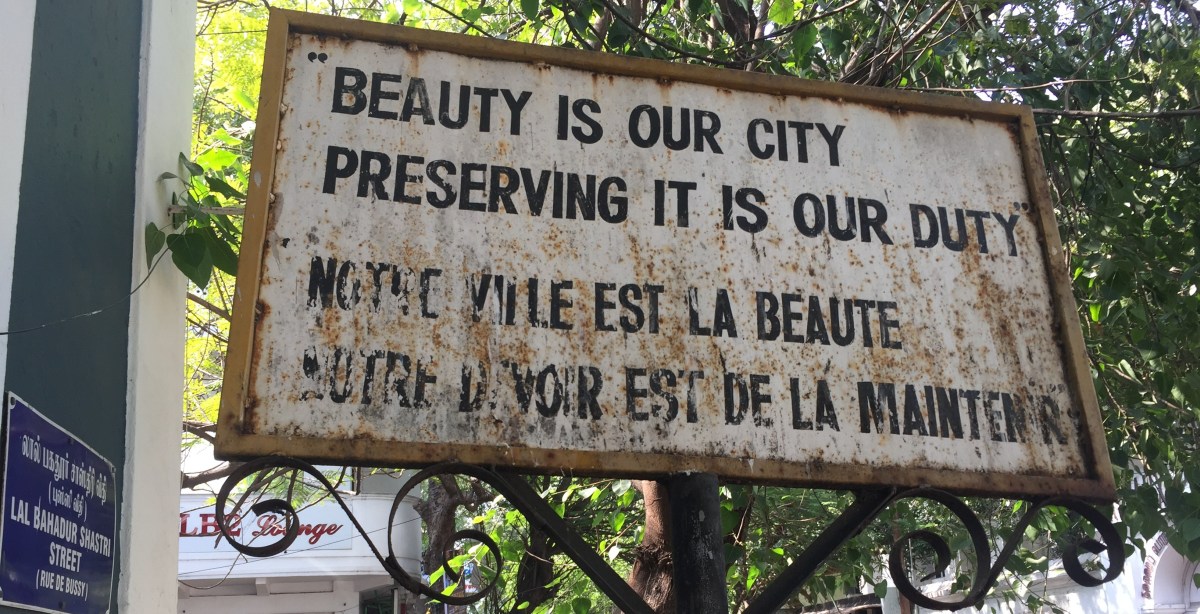
Puducherry (commonly referred to as Pondicherry) is unlike anywhere else we have visited in India. Every city and town has remnants (and sometimes more than remnants) of British and Dutch colonialism, but Puducherry was a French colony and has a completely different feel. Entering the city, you first experience the modern Indian city with familiar stores and traffic, but as you reach the core, it completely changes. The streets are laid out on a grid, lined by lovely buildings with ornamented railings. There are frequent parks and broad sidewalks. And its glory is truly felt along the promenade by the sea, closed to traffic every evening at 6pm so that people can pour out of their houses for, well, a promenade.
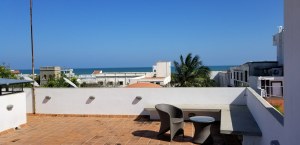
We chose Puducherry to be our location for Christmas and carefully selected an Airbnb in a prime location, hoping that the photos on the website were accurate. Happily, they didn’t even begin to do it justice. This was a magnificent place to stay, particularly after the more rustic choice we made for Mahabalipuram. We were able to buy groceries, including good coffee and pineapples. We also got everything we needed for Melissa to cook a pasta feast at home on Christmas Eve. Tom even made carrot paratha on Christmas to go along with the meal that we otherwise ordered in.
Christmas eve dinner
Christmas breakfast
Homemade carrot paratha
Christmas cocktails on the rooftop deck
Unusual Christmas dinner
Our Puducherry stay also coincided with Melissa’s dad’s birthday which she always celebrates with Indian food. Such fun to celebrate at the beautiful Villa Shanti in India.
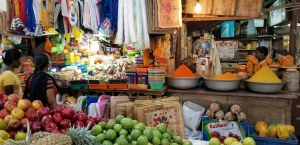
Puducherry is less about must-see sights and more about enjoying the feel of the place. Although we had a driver for our stay, we wanted to walk everywhere, so we let him go for a couple of days (for which we were later grateful when he told us that his son had been born on our first night there). We enjoyed the market with its jumble of beautiful produce, we found delicious French croissants and other tasty pastries, we strolled through the early 19th century botanical gardens where the French colonists had tested the strength of plants they wanted to plant there (and where the fictitious Pi Patel began his journey), and on Christmas morning we visited the gothic Basilica of the Sacred Heart of Jesus.
It was a wonderful visit, and we look forward to returning for relaxing long weekends, hopefully to stay in the very same Airbnb. But for now, it’s off to Tiruvannamalai.
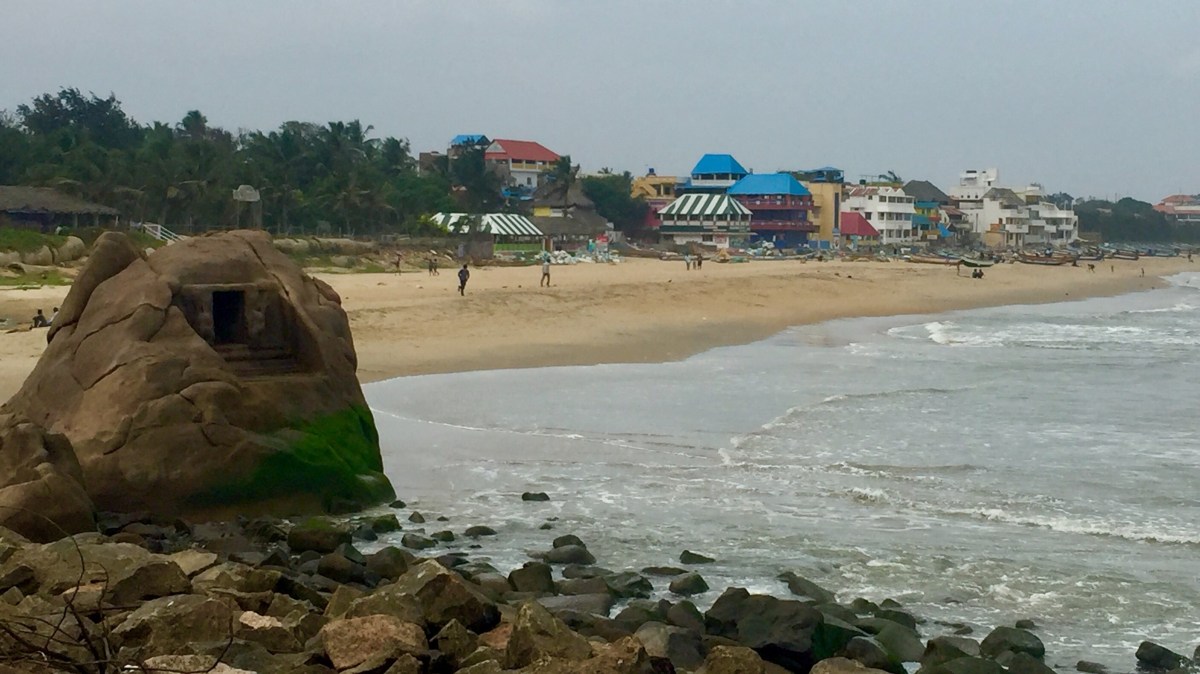
After the inland adventures in Bokkapuram and Mysuru, it was time to head to the Tamil Nadu coast and the sleepy, backpacker town of Mahabalipuram (also known as Mamallapuram). The town specializes in two things: fresh, daily caught fish, and ancient stone carvings. Rachel, one of our travelling partners, took advantage of the fish. We all took advantage of the antiquities.
One of the cave temples
Tom was under the weather but persisted
A cool carving in one of the walls.
A few blocks off the beach, a park run by the Indian Archaeological Society protects a huge granite outcropping with over a dozen bas relief stone carvings. Ostensibly, they were built as temples. Melissa read, however, that they were really an opportunity for the stone artisans of the time to show off their prodigious skills. And prodigious they were. On the macro level, they carved large chambers from solid granite. That is impressive enough. But then the micro level is just as impressive. The details in these carvings are incredible. The ceilings, pillars, and spaces surrounding the inner sanctum are all intricately decorated. The larger carvings on the walls clearly tell stories that made us wish that we’d hired one of the eager guides at the entrance to interpret them for us. We could fabricate stories based on the tiny bit we know about the stories of the Hindu deities, but it might have been more interesting to discover the actual stories.
The first bas relief carving we came across.
Laurence “holds up” Krishna’s Butterball.
The park itself is a nice sanctuary. It is a quiet, clean, pleasant stroll. There were a lot of other people there appreciating the carvings with various levels of enthusiasm, but we hoped for nothing else. These things deserve to be appreciated. We were also fascinated by the walk and finding along the way small carvings in the granite that were clearly weather worn bits of practice that anywhere else would have been the center of attention. There are also several unfinished caves, abandoned at various depths, with pillow-like carvings where they were clearly preparing to create the void that would one day become a temple/vanity project.
Melissa and Rachel explored the Shore Temple, the Five Rathas, and Arjuna’s Penance while Tom continued to nurse his cold and Laurence opted for a break from the heat. While a bit weathered by the ocean breezes, the 8th century Shore Temple is still truly impressive. It is now primarily a tourist site but does still have an active temple with devoted visitors at its core. The 7th century Five Rathas (or Pancha Rathas) are actually in better condition thanks to their inland location. They are apparently shaped like chariots, but we couldn’t quite see that. They look like incredibly ornate little houses to us. Arjuna’s Penance depicts the story of Arjuna’s austerities to earn Shiva’s weapon for his ultimate battle. It is strikingly beautiful. We were even more impressed, though, by the smaller unfinished cave temples right next to it that seemed to depict normal activities like milking a cow and carrying a child.
Walking between these various monuments, you pass present day stone carvers. Sometimes you just see wares for sale, larger than life and small enough to put in your pocket. Other times you see people sitting and carving beautiful works right there on the sidewalk. It’s easy to imagine that these are the descendants of the stone carvers who built these monuments 1,000+ years ago.
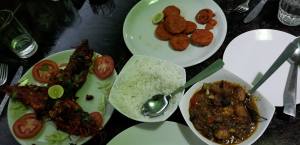
Mahabalipuram is not intended to be a foodie paradise, and we struggled to find truly exceptional food. We all agreed: most of it was good, not great. Dinners were all about the view (and the seafood). The first night we ate at Bambino’s, where Rachel took advantage of what Mahabalipuram really specializes in: fresh seafood. She had prawns caught that day. Most notably, though, the rooftop restaurant had a beautiful view of the beach and the Bay of Bengal. The second night we ate at the Sea Shore Garden Restaurant, just down an alley from our guesthouse. Again, it was good enough. But mostly, it was right on the beach. Laurence was amused by his interactions with the wait staff at both dinners, about what Chettinadu means — we now think it is a region of a district of Tamil Nadu — and what Chicken 65 is — we now know it is a breading and frying process, not just for chicken, invented in 1965 (these links are probably only accessible if you are one of our facebook friends). We had two meals, a lunch and a dinner, at Golden Palate. These were quite a bit tastier and a little bit off of the main tourist area, though at a hotel. The breakfast at our guesthouse was forgettable except for one amazing detail. We all ordered pineapple juice from the menu, but were told that we could only have watermelon juice. Two people at the table actively dislike watermelon so declined, at which point we were told that we could order pineapple juice after all. Seconds later, we saw the the proprietor race out of the restaurant, hop on his motorbike, and speed away, only to return moments later with two whole pineapples that soon became very fresh and tasty juice.
Speaking of the guesthouse, we definitely got what we paid for at about $15 per night. We set out on this vacation to have the variety of experiences that India has to offer. Sure, it would be glorious to always stay in luxury, but we also wanted to stay in more authentically Indian (and Lankan) places, too. Guesthouses are usually simple, amenity-free, and run by charming hosts in great locations. This one was all of those things. We had a bed and (bonus!) A/C. The little table and chairs outside our rooms were perfect for chatting about the day to come. And it did not inspire any desire to spend the day lounging about the hotel — we were ready to get out and explore.
We enjoyed our stay in Mahabalipuram, but we were pretty sure bigger things were in store in Puducherry.
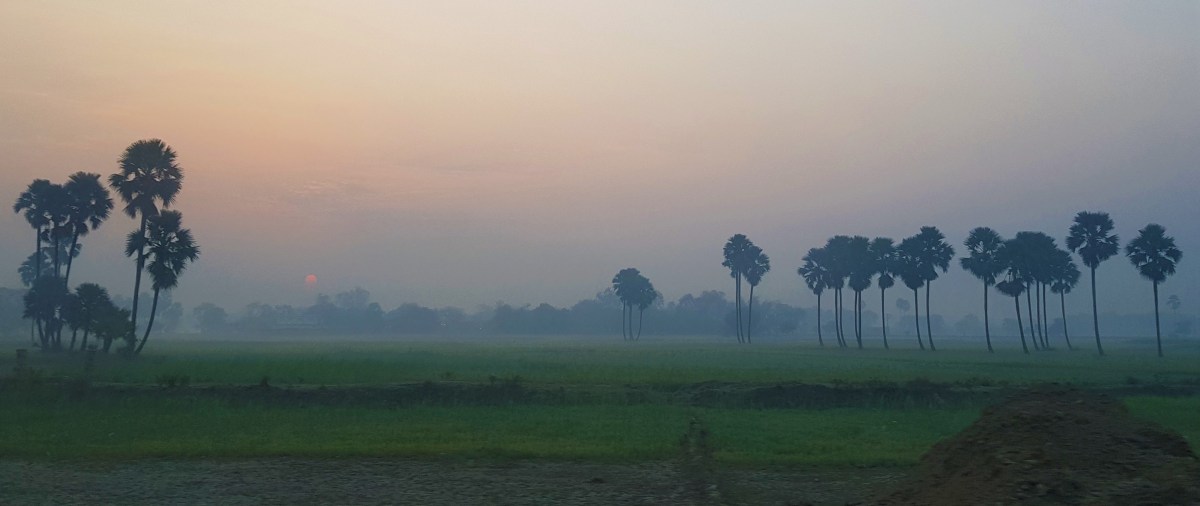
 century BC, Buddha attained enlightenment under a Bodhi tree in Bodh Gaya. In the same century, Mahavira, the 24th and final savior of Jainism, codified the Jain religion. Not far from Bodh Gaya is the site of one of the world’s first universities, founded in Nalanda in 450 CE. The countryside is beautiful with endless fields and colorful buildings, and the Ganges River runs the length of the state from East to West. Bihar is the largest producer of vegetables in India and the second largest producer of fruit. This emphasis on agriculture is emphasized by the fact that only about 11% of its population lives in urban areas.



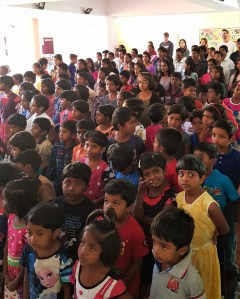 for the students, and singing the school song about all the things these children can become. I was impressed to see a 4th grade girl get up to speak to that day’s virtue: Gratitude. She stood up straight and spoke
 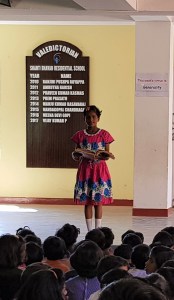 loudly and clearly to a room full of her peers, her teachers, and a bunch of strangers. She was followed by four high school students presenting stories from that day’s news. Not only did they have to speak without notes about current events, but they had to be prepared for questions from anyone in the room, many of their peers posing probing and thoughtful queries. Assembly closed after two beautiful songs by the school chorus.
 such, acknowledging that they probably get more of his attention than his own sons received. This point is backed up by a laughing Ajit who says that he wishes he’d gone to Shanti Bhavan. Both stress that Shanti Bhavan is not run by money, but by love. They hope to soon break ground on a second school in Karnataka, with a long term vision of multiple schools around India to increase the impact of their efforts.

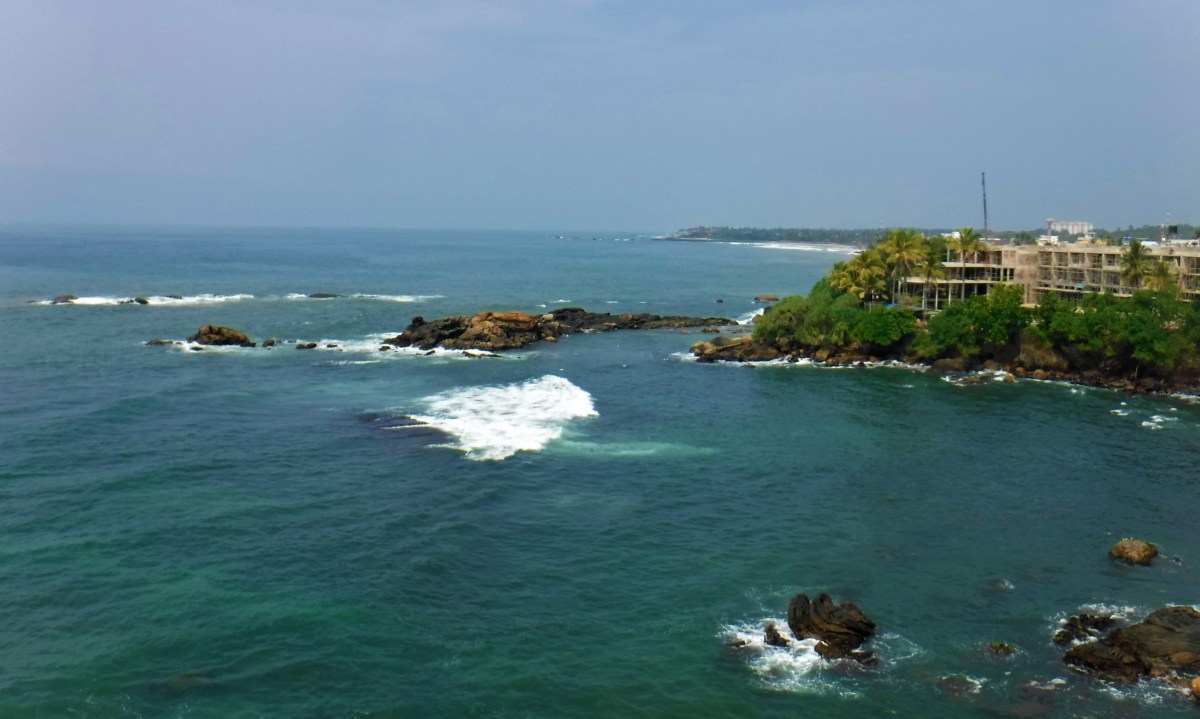
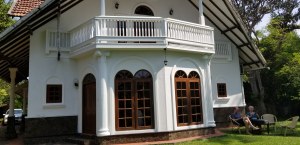 a few days on the Southwestern coast of Sri Lanka. A four hour drive from


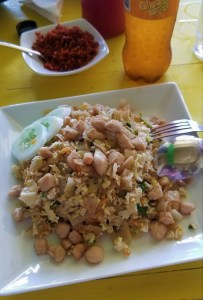
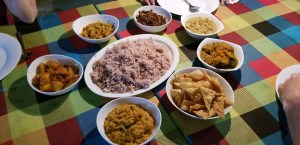 fact that it was our only dinner not on the beach. It was a tiny all veg restaurant (sorry, Laurence, though he didn’t seem to suffer), with about eight tables and a set menu. We quickly learned that the set menu was because it is basically home cooking. A kind woman and a small staff cook a few dishes: some dal, a ubiquitous caramelized onion and eggplant dish, a curry made with jackfruit, pineapple curry (Tom’s favorite), and other dishes. It took us back to our meals at


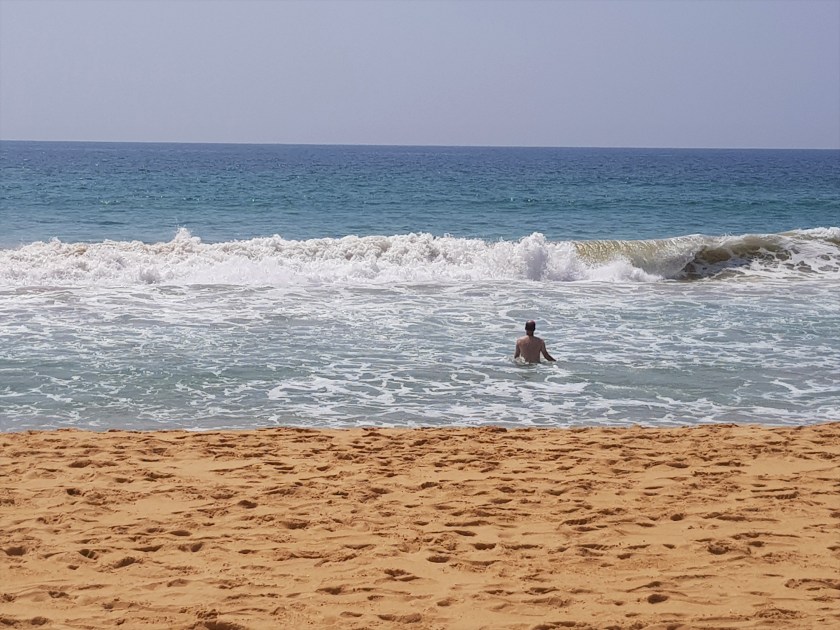 The last morning in Hikkaduwa meant time to pack up. We bid farewell to Rachel and Laurence at the Colombo airport and spent one last night just the two of us back in


 directly above us on the 5th floor. Rooms were basic, but clean, and most showers had warm water. Luckily none of us mind stairs, and we very much enjoyed the pool with
  swim up bar serving some lovely fresh juice cocktails (that detail allowed us to relive one of the ways we were pampered in Fiji with Elaine/Mom and Aunts Linda and Sue). We stayed in Dambulla, placing us equidistant from 2,000-year-old Anuradhapura and the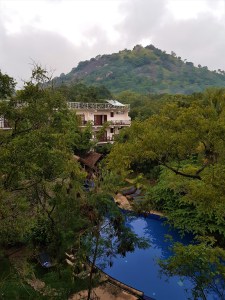


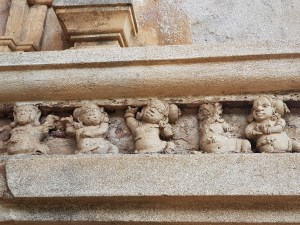
 the words of our guidebook, “energetic dwarfs cavorting around the outside.” And of course our day wouldn’t have been complete without a bit of wildlife in the form adorable monkeys and a snake! We then met up
 with our driver and asked him to take us to the Dambulla Cave Temples.


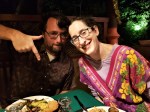 for tourists. Our dining options consisted solely of hotel restaurants, so we decided we’d be just
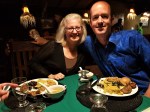 as happy at our own hotel as at anyone else’s. And the evening buffet was pretty tasty, served by the charming and very international staff. And we couldn’t beat cocktail hour split between drinks at the pool and drinks prepared by our resident mixologist, Laurence, using fresh limes and passion fruits spirited away from the breakfast buffet.


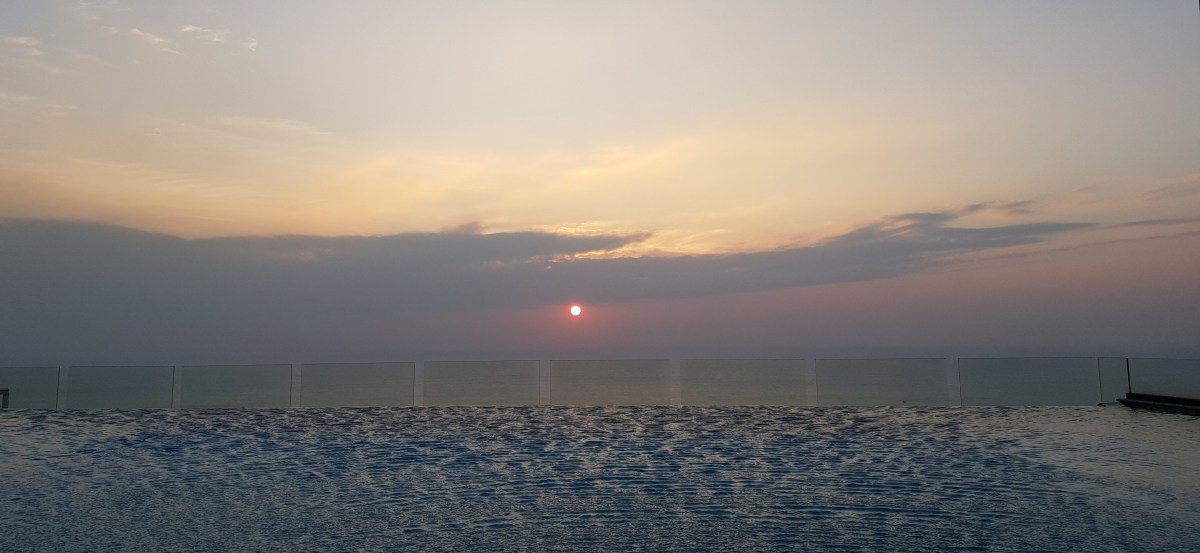
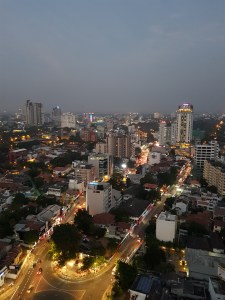 for our final night as well. Coming from Bangalore, Colombo felt almost artificially sanitized. There’s a little bit of litter, sure, but no garbage piles at all. Traffic is a bit heavy in the city, but people actual use lanes for driving and (the biggest shock of all) they stop at crosswalks and wait for pedestrians to make it across the street. Amazing!
 sampled our first hoppers (a sort of bowl-shaped, rice-based bread that’s thick on the bottom and crispy on the edges, often filled with things, not unlike appam, which we enjoyed at
  were to begin clearing away the food, so there was no time to waste! We frantically helped ourselves to everything that looked good and just barely managed to fit it all on our table. When it was time to leave Colombo, we didn’t want to go! We hadn’t yet done much wandering around the city itself, and it was hard to part with the luxury of the Movenpick. Such a happy thought that we could return for the final night of our trip.
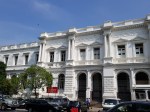 to be there. We wandered around the fort area which had some gorgeous old buildings and monuments but paled a bit in comparison to the charm of Galle Fort which we’d visited just the day before. The heat was pretty incredible given that this is
 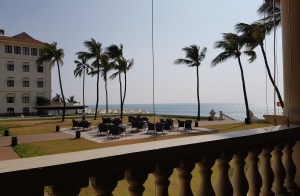 supposed to be the coolest time of the year, and we were glad to call an end to exploring by mid afternoon and retire to the terrace of the beautiful Galle Face Hotel where we enjoyed cocktails while admiring the ocean view before going back to our own hotel to relax before dinner.





 didn’t even begin to do it justice. This was a magnificent place to
  stay, particularly after the more rustic choice we made for Mahabalipuram. We were able to buy groceries, including good coffee and pineapples. We also got everything we needed for Melissa to cook a pasta feast at home on Christmas Eve. Tom even made carrot paratha on Christmas to go along with the meal that we otherwise ordered in.


 had been born on our first night there). We enjoyed the market with its jumble of beautiful
  produce, we found delicious French croissants and other tasty pastries, we strolled through the early 19th century botanical gardens where the French colonists had tested the strength of plants they wanted to plant there (and where the fictitious Pi Patel began his journey), and on Christmas morning we visited the gothic Basilica of the Sacred Heart of Jesus.




 mostly, it was right on the beach. Laurence was amused by his interactions with the wait staff at both dinners, about
 Wellserton Wanderings